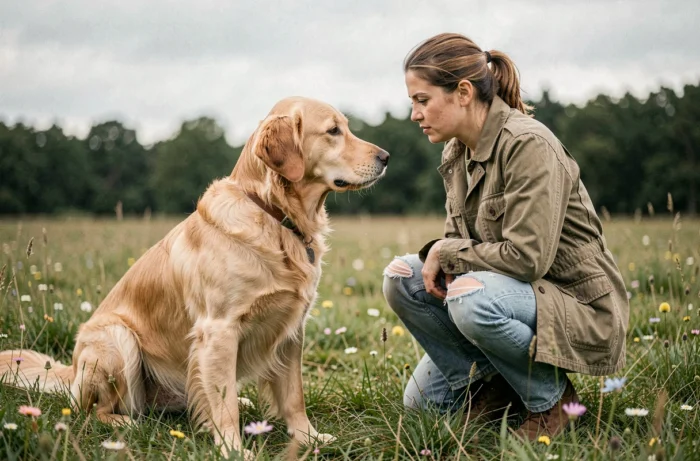
Animal communication relies on physiological and cognitive mechanisms that popular approaches oversimplify. Understanding the resources available on this subject requires distinguishing between works based on bioacoustics, cognitive ethology, and behavioral observation protocols from purely intuitive content. Here, we provide a structured overview of research areas and concrete tools to deepen this discipline.
Bioacoustics and mega-databases of vocalizations: the technical foundation
The analysis of animal communication has shifted in recent years towards a computational paradigm. We no longer work species by species with limited hypotheses. Researchers are now creating mega-bioacoustic databases that allow us to identify who is speaking, in what context, and with what vocal structures.
This change in scale permits interspecies comparisons that were previously impossible. A recording of cetacean vocalizations can be compared to calls from primates or birds to identify common structural patterns. The resource is no longer just the field, but the massive accumulation of annotated sound data.
To access content that covers both intuitive listening and structured observation protocols, all resources from Syntonie Animale offer a comprehensive overview of practical approaches, from training to individual sessions.
Individual signatures and nominative calls
Research published since 2023 shows that artificial intelligence now identifies individual vocal signatures in the calls of elephants and certain primates. These results suggest the existence of nominative calls addressed to a specific individual.
Verification involves playback experiments: a specific call is played to an animal, and its reaction is measured. Subjects respond more strongly to calls directed at them than to those addressed to a conspecific. This experimental protocol constitutes a valuable methodological resource for anyone wanting to understand animal communication beyond subjective impressions.

AI decoding: structure of vocalizations versus interpretation of meaning
AI is capable of distinguishing structures in animal vocalizations, but it does not decode the meaning of these signals. This nuance is fundamental and often absent from popularized content.
In sperm whales, algorithms have highlighted a sort of phonetic alphabet in their series of clicks. The combinatorial complexity of these sequences far exceeds previous estimates, indicating a structured organization of their communication. We observe regularities, not a word-for-word translation.
Detectable emotional valence
Another research area concerns the detection of emotional valences in the cries of domestic and wild animals. Machine learning models are increasingly able to classify vocalizations according to their emotional charge (stress, call, play) with growing reliability.
For practitioners in animal communication, this convergence between measurable data and empathetic listening opens a field of validation. An intuitive communication session can now be compared to bioacoustic measurements, enhancing confidence in the proposed interpretations.
Training resources in animal communication: selection criteria
The market for training in animal communication lacks regulatory framework. We recommend evaluating each resource according to specific criteria rather than relying solely on reputation.
- Does the program explicitly distinguish between registers (ethology, intuitive listening, energy healing), or does it mix everything without hierarchy?
- Does the training include exercises for calibrating intention and awareness with structured feedback (feedback from a trainer, confrontation with third-party observations)?
- Do the proposed session protocols integrate an emotional aspect of the animal verified by the caretaker or veterinarian, and not just by the practitioner’s feelings?
- Does the curriculum address the limits of the discipline, particularly the difference between behavioral correlation and projective interpretation?
A program that does not make these distinctions produces practitioners unable to assess the reliability of their own perceptions. The rigor of the educational framework conditions the quality of the practice.
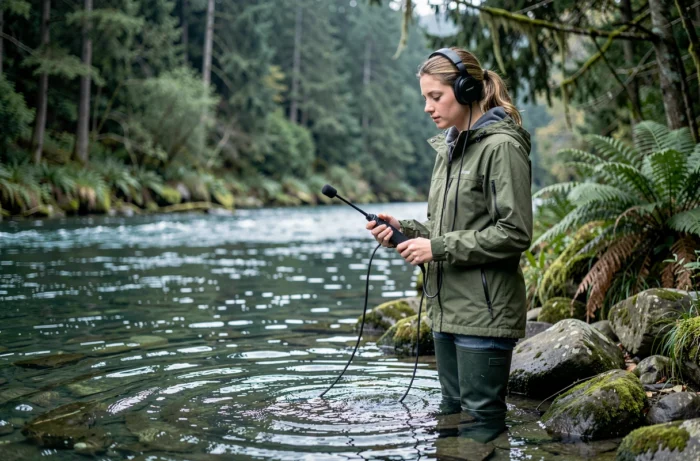
Regional dialects and ecological context: a neglected angle
Animals develop regional vocal variations comparable to dialects. This phenomenon, documented in songbirds, cetaceans, and certain primates, alters the interpretation we can make of a vocalization.
A practitioner working with horses raised in different sound environments, or with dogs of breeds selected from geographically isolated lineages, must integrate this variable. The ecological context shapes the vocal repertoire as much as the emotional state of the animal.
Consequences for field practice
In animal communication sessions, this data implies not imposing a universal interpretation grid on signals that vary according to the living environment. Attentive listening to the heart of the animal gains precision when it is based on knowledge of the vocal repertoire specific to its population of origin.
Resources that intersect field ethology and intuitive approaches remain rare. It is precisely in this space that practitioners trained in both behavioral observation and energetic listening provide measurable added value.
Animal communication is currently at a crossroads between massive computational data and intuitive listening practices inherited from older traditions. The most useful resources are those that allow navigation between these two registers without confusing measurable vocal structure and subjective interpretation. Choosing sources with discernment remains the first act of competence in this field.