
The verification of criminal records has become the primary lever of trust in home services. Since Decree No. 2026-324 of April 28, 2026, the certificate of good character is mandatory for all individuals working with vulnerable populations, including employees, interns, apprentices, and volunteers in medical-social structures. This regulatory obligation profoundly changes how a provider builds its credibility.
Certificate of Good Character and Verification of Criminal Records of Workers
Trust in home services no longer relies solely on reputation or word-of-mouth. It is formalized through a legal framework of regular verification. Decree No. 2026-324 extends the certificate of good character requirement to establishments and services supporting children with disabilities and the elderly, across the entire French territory starting September 1, 2026.
Specifically, each worker must present a certificate issued within the last six months upon hiring, and then renew it every three years. This verification covers operators, managers, employees, and volunteers of the relevant structures (nursing homes, home help services, accommodation).
The government has strengthened this system by launching the platform honorabilite.social.gouv.fr, operational since 2024 and expanded in 2026. This state platform centralizes verifications and allows employers to ensure, with just a few clicks, that their workers meet the criteria for good character. For a provider, using this platform and communicating this approach to families serves as a signal of seriousness that is hard to contest.
We observe that organizations that integrate this verification into their onboarding process, even before the legal obligation, gain a clear competitive advantage over those that only meet the regulatory minimum. The issue is not administrative; it is commercial: a client who knows that their worker has been verified through a national database is more likely to return.
You can discover home services on News Online Passion to delve deeper into the trust mechanisms between providers and beneficiaries.
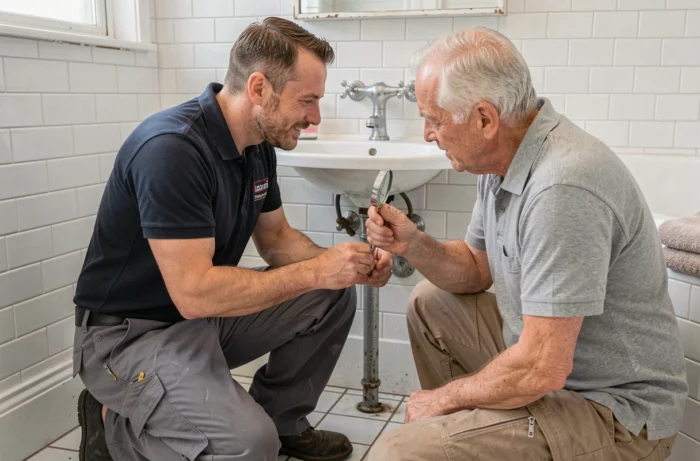
Quality of Service and Operational Management Processes
A background check is not enough if the service itself is mediocre. The quality perceived by the client hinges on very concrete points, often underestimated by providers who focus solely on relationships.
Traceability of Interventions
The client wants to know what has been done, when, and by whom. A provider who supplies a report after each visit (even brief: times, tasks performed, observations) creates a measurable relationship of transparency. Digital scheduling management tools today allow for the automation of this traceability without excessive administrative burden.
A systematic report after each intervention reduces disputes and gives the client tangible proof of the service. For vulnerable populations (isolated elderly individuals, children with disabilities), this traceability also reassures family caregivers who are not present during the intervention.
Continuity of the Worker
Staff turnover is the primary destroyer of trust in the sector. An elderly beneficiary who sees three different workers in one month loses their bearings. We recommend formalizing a commitment to continuity in the service contract, with a designated primary worker and an identified substitute in advance.
This stability has a cost (training, employee retention), but it directly translates into client retention. Companies in the sector that display low turnover mention it in their marketing materials, and they are right to do so.
Personal Data and Privacy Protection at Home
Intervening in a client’s home means accessing their intimate space. The management of personal data collected during services (health information, lifestyle habits, access codes) is a trust issue that most providers handle superficially.
A serious provider must have an explicit protocol covering several points:
- Secure storage of health data and personal information, with access limited to only the relevant workers and direct management
- Destruction or anonymization of data at the end of the service contract, in accordance with GDPR, with a maximum timeframe communicated to the client
- Training of workers on confidentiality (not discussing a client’s situation with other beneficiaries, not photographing the home)
- A contractual commitment to discretion signed by each worker, available for client review upon request
Confidentiality is not an abstract legal issue; it is a selection criterion for families. A provider who addresses it spontaneously during the first meeting immediately stands out from those who never mention it.

Ongoing Training and Skill Development of Workers
The initial training of a home worker does not guarantee anything over time. The needs of beneficiaries evolve (new pathologies, gradual loss of autonomy, regulatory changes). A provider that does not regularly train its teams sees the quality of service degrade mechanically.
The most impactful training for client trust is not always what one might expect. Technical skills (assistance with bathing, preparation of adapted meals) are anticipated. What differentiates a provider is training in relational skills:
- Management of emotional distress or aggression related to neurodegenerative pathologies
- Communication with family caregivers, especially when expectations diverge between the beneficiary and their family
- Detection of signs of abuse or neglect in the beneficiary’s environment, with a clear reporting protocol
A worker trained in both relational skills and technical gestures inspires lasting trust. Providers that document their annual training plan and make it accessible to clients (number of hours, topics covered) turn it into a verifiable commercial argument.
Trust in home services is built on evidence, not promises. Regulatory verification of backgrounds, traceability of interventions, explicit protection of personal data, documented ongoing training: each element is verifiable by the client. Providers that structure this evidence and make it visible even before being asked for it are the ones that retain clients.