In front of a rack that mixes the two labels, one often hesitates between a sweatshirt marked Tommy Jeans and a polo stamped Tommy Hilfiger. The logos look similar, the red-white-blue tricolor flag is everywhere, and yet the cuts, materials, and prices tell different stories. Understanding what separates these two lines helps avoid wardrobe mistakes.
Labels and textile composition: what the collar reveals before trying on
The most reliable reflex in-store is to turn the garment inside out. On a Tommy Hilfiger piece, the composition label increasingly mentions organic cotton and recycled polyester blends, especially on recent sweatshirts and hoodies. This direction aligns with the “Forward Fashion” roadmap of the PVH group, which aims for complete traceability of cotton by 2030.
On a Tommy Jeans piece, the composition remains more classic: standard cotton, sometimes blended with elastane for stretch denim. The fabric is designed for volume and accessibility, not to showcase a particular material commitment.
When comparing two hoodies at similar prices, this difference in composition can affect durability after washing. An organic cotton/recycled polyester blend generally holds its shape better after several cycles. This is a concrete criterion that style comparisons often overlook.
To truly grasp the difference between Tommy Jeans and Tommy Hilfiger, one must look beyond the logo and consider what the fabric reveals about the positioning of each line.

Tommy Hilfiger and Tommy Jeans cuts: two approaches to fit
Tommy Hilfiger is tailored for smart-casual use. The polos fit close to the body without being tight, and the shirts follow a straight line compatible with a blazer. It’s a structured fit, designed for the office or a dinner.
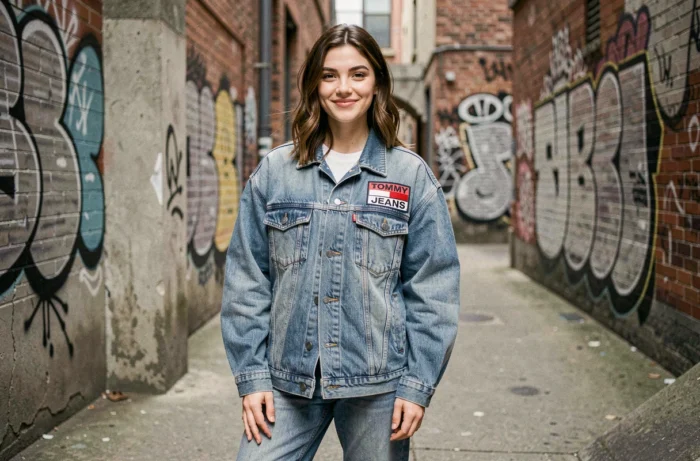
Tommy Jeans adopts looser cuts. Jeans are often offered in straight or relaxed fit, trucker jackets maintain a generous shoulder width, and oversized sweatshirts dominate the collection. The style embraces a 90’s heritage, with volumes reminiscent of the streetwear of that era.
Concrete case: choosing jeans based on body type
For a man who wears XXL on top and is looking for matching pants, Tommy Jeans offers more inclusive sizes in denim, with an inseam length suited for wide cuts. Tommy Hilfiger, on the other hand, remains more conservative in its range of pant sizes, with a fit designed for standard silhouettes.
The leg length also varies. On a Tommy Jeans pair, it’s easier to find options in short or long sizes. On a Tommy Hilfiger chino, the range of lengths is more limited. Returns vary on this point depending on seasonal collections.
Target audience and price positioning: two lines that do not target the same buyer
PVH, the group that owns both brands, explicitly positions Tommy Jeans as a volume lever for Gen Z and Millennials. Prices are softer, designs are made to circulate on social media, and logos are intentionally visible.
Tommy Hilfiger targets an audience aged 25 to 40, active, who seeks more discreet and versatile pieces. The positioning is that of “Modern Prep” premium-accessible: one pays a bit more for a garment that transitions from casual Friday to Sunday brunch without changing style.
- Tommy Jeans: visible logos, bright palette, key pieces like mom jeans or trucker jackets, lower entry prices
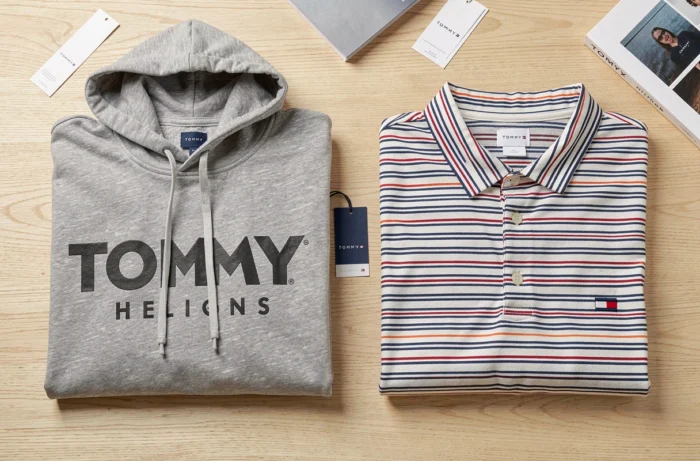
- Tommy Hilfiger: discreet embroidered logo, classic colors (navy blue, white, black), polos and shirts as wardrobe staples
- Both lines share the same tricolor flag, but the size of the logo on the garment is often enough to distinguish them: large printed flag on the chest for Jeans, small embroidered flag for Hilfiger
Mixed wardrobe Tommy Jeans and Tommy Hilfiger: combinations that work
There’s nothing stopping you from mixing the two lines in the same outfit. A slim-fit Tommy Hilfiger chino with an oversized Tommy Jeans sweatshirt creates a volume contrast that works well for everyday wear.
The common mistake is stacking two pieces with large logos. A Tommy Jeans hoodie with an XXL flag worn over Tommy Hilfiger pants with a side stripe can be overwhelming. It’s better to limit the visible logo to one piece per outfit.
- For the office: Tommy Hilfiger polo + raw Tommy Jeans straight jeans, with no visible logo on the pants
- For the weekend: Tommy Jeans sweatshirt + Tommy Hilfiger chino shorts, the casual/preppy contrast works well
- For a casual evening: Tommy Hilfiger shirt open over a plain Tommy Jeans t-shirt, the layering is sufficient
The renaming of the former Hilfiger Denim line to Tommy Jeans, now completed globally, has clarified the offering. Two labels, two wardrobes, one shared American DNA. The choice is made on the ground, in front of the fitting room mirror: structured cuts and committed materials on one side, generous volumes and entry-level prices on the other. The best piece is the one that fits you well, not the one with the most visible logo.