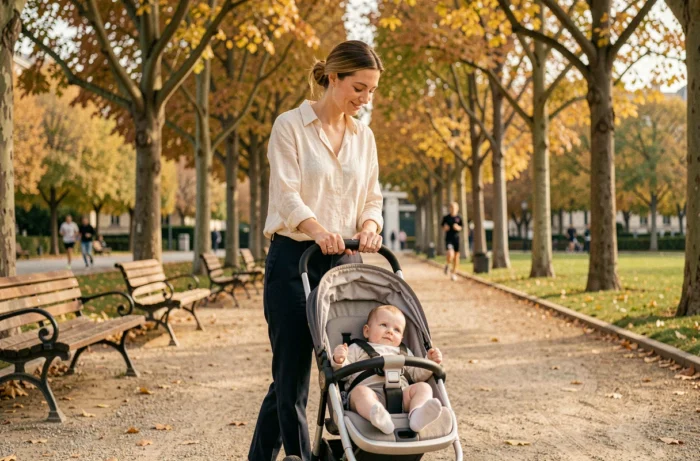
Finding a sustainable lifestyle while raising a child in Paris involves navigating very real constraints: compact housing, commute times, and a high cost of living. However, the capital also boasts a network of services, green spaces, and initiatives designed for families that few other French cities can offer.
Childcare in Paris: What Changes with the Multi-Year Plan
The “full employment” law of December 18, 2023 has changed how cities organize the care of young children. Paris must now develop a multi-year plan for maintaining and expanding childcare services, led by a new dedicated organization.
Specifically, the City created an Observatory for Families and Early Childhood in 2025. Its role is to structure knowledge about the needs of young children and their parents, coordinate stakeholders (municipal and associative nurseries, childminders), and process requests for the opening or expansion of facilities.
For a mother looking for a nursery spot, this reform has a direct consequence. The childcare offer is now planned by district, with public data on available spots. Before submitting an application, consulting the publications of this Observatory allows one to identify areas where demand is lower and to adjust their strategy (requesting multiple districts, considering an associative nursery rather than a municipal one).
The blog Une Maman À Paris regularly details the experiences of mothers navigating these processes, helping to clarify a system that remains opaque for many.

Daily Mobility: Organizing Trips with a Child in the Capital
Have you noticed that a twenty-minute trip without a child can easily double with a stroller? The choice of transportation mode impacts the entire family organization.
Public Transport or Active Walking
The Paris metro is poorly suited for strollers: few stations have elevators, and escalators are often out of order. Buses and trams are more manageable on a daily basis, with accessible platforms and a less stressful pace during off-peak hours.
Walking remains the most reliable mode of transport for short trips. Paris has a dense network of pedestrian streets and 30 km/h zones that make routes safer. Prioritizing housing located within ten minutes on foot from school or nursery radically changes the mental load associated with travel.
Cargo Bikes and Alternatives
Cargo bikes have emerged as a real solution for Parisian families. Bicycle lanes have expanded in recent years, and several districts have secure parking. The purchase cost remains high, but municipal aids are available to reduce the expense.
- Check eligibility for subsidies from the City of Paris before purchasing (the amount varies depending on the type of bike and household income)
- Test several models through long-term rentals before committing, to assess the actual space needed in your building
- Identify protected routes between home, school, and shops to avoid busy roads
Green Spaces and Free Activities: The Real Asset for Parisian Families
Paris is not just concrete. The city has several hundred parks, gardens, and squares spread across all districts. For a mother with young children, these green spaces are essential outlets in daily life.
The most famous parks (Buttes-Chaumont, Luxembourg, Monceau) are often crowded on weekends. Neighborhood squares, less visible, offer a quieter alternative closer to home. Identifying three or four spaces accessible on foot from home, along with their hours and facilities (play areas, water points, shaded benches), saves precious time on days when a quick outing is needed.
Little-Known Free Activities
Municipal libraries offer workshops for young audiences without registration, featuring reading, crafts, or music sessions depending on the district. These slots, often on weekdays late in the morning, are perfect for children who are not yet in school or are in part-time kindergarten.
Municipal animation centers also organize activities at reduced rates, calculated based on family income. The diversity of offerings (dance, visual arts, judo) allows families to try several disciplines without a heavy financial commitment.
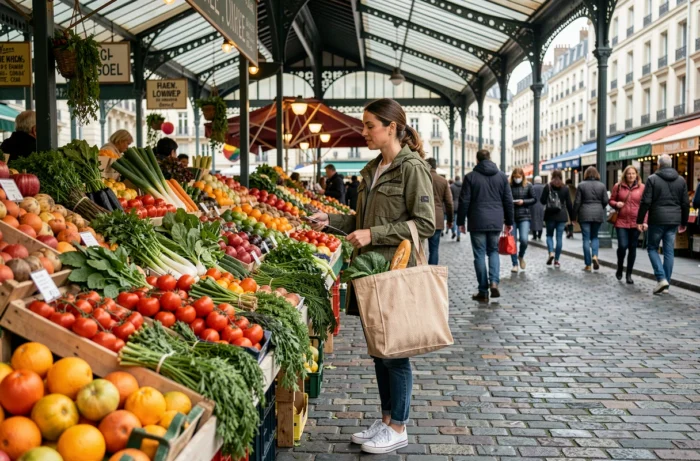
Social Network and Mental Load: Building Your Village in the City
Isolation is one of the most tangible risks for a mother in a dense urban environment. Paradoxically, living surrounded by millions of people does not guarantee a support network.
Parent groups organized by district (through local associations, community centers, or online networks) are an effective lever. Participating in a parent café or a collective workshop at a PMI allows for meeting families in the same area with children of similar ages.
- Parisian PMIs organize drop-in sessions and support groups led by health professionals, open to all without conditions
- Some associations offer informal co-parenting: shared custody between neighboring families, group outings to the park, sharing childcare equipment
- Family houses, present in several districts, provide a free welcome space with parent-child activities
This relational dimension is not a bonus. For many mothers, it is the factor that determines whether life in Paris remains sustainable over time. A decent home and a nursery spot are not enough if daily life is experienced alone, without support.
The quality of life for a family in Paris depends less on the prestigious district than on the ability to activate the right resources: suitable childcare, smooth mobility, breathing spaces, and human connections. These four pillars, when they work together, transform a demanding city into a place where growing up with children is a conscious choice, not a burdensome trial.