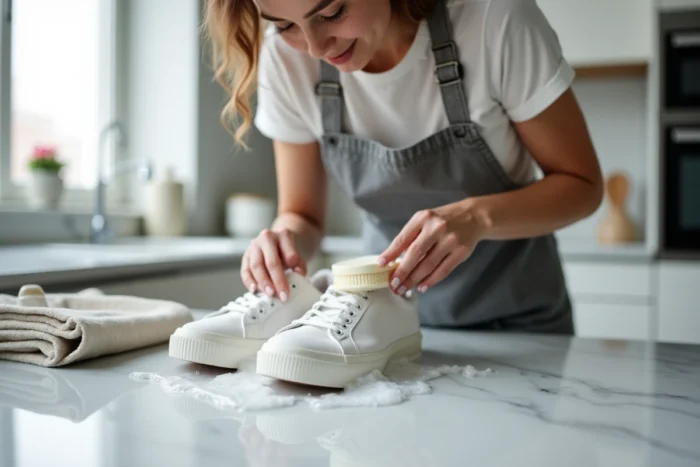
A pair of sneakers loses its shape and cushioning long before the sole is worn out, simply because embedded dirt degrades the fibers and adhesives. Cleaning your sneakers is not a matter of vanity: it is a maintenance operation that protects the materials and extends the lifespan of the shoe. Depending on the type of upper (leather, canvas, mesh, suede), the method and products change radically.
Why the material of the upper determines the entire cleaning protocol
Leather sneakers, even coated or corrected, react very differently to water and friction compared to canvas or synthetic mesh. A Mephisto guide specifies that properly maintained leather sneakers last up to five times longer than comparable mesh sneakers. This ratio changes the purchasing logic: a more expensive leather pair may cost less over three years than a textile pair replaced each season.
Suede and nubuck, on the other hand, tolerate neither water nor conventional detergents. Rubbing them with a damp cloth is enough to create permanent stains. Therefore, any maintenance routine begins by identifying the dominant material of the upper before touching a product.
Brands specializing in sneaker care, such as Sneaky, offer ranges formulated for each type of material, which avoids compatibility errors between cleaner and surface.
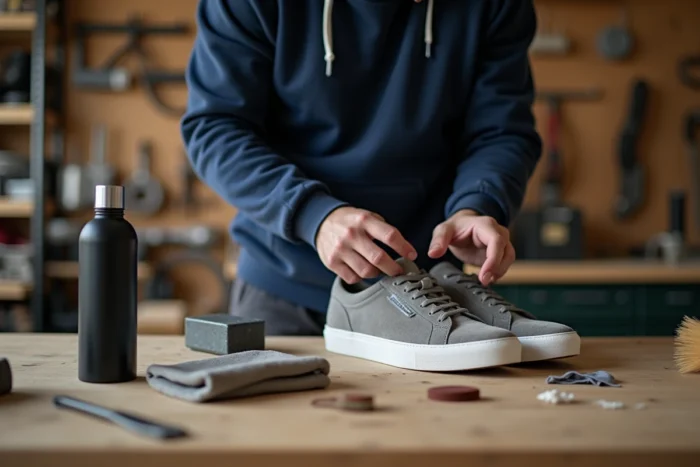
Cleaning the sole: the right order and the right actions
The sole is the most exposed area, but also the most durable. It is where you should start, to avoid splattering mud on an already cleaned upper.
Remove dry residues before any contact with water
A dry brushing with a hard bristle brush dislodges clumps of dirt and small stones stuck in the treads. Skipping this step means spreading dirt instead of removing it.
Scrub the sole with a mixture of water and soap
A little Marseille soap or mild cleaner in warm water is sufficient. Apply the mixture with a medium-bristle brush, focusing on the edge of the sole, the area that yellows the fastest. Wipe with a damp cloth, not under the tap: excess water may seep between the sole and the upper by capillarity.
Cleaning the upper according to the material: leather, canvas, and suede
This is the step where mistakes are most costly. A wrong product or an overly aggressive action damages materials that, unlike full-grain leather, cannot be repaired.
Canvas or mesh sneakers
Canvas absorbs stains quickly. Prepare a solution of warm water with a few drops of mild cleaner without bleaching agents. Dip a soft brush into the mixture, then scrub the upper with light circular motions. Blot immediately with a clean cloth to absorb the excess.
For stubborn stains on white canvas, a mixture of baking soda and water (paste-like consistency) applied locally for about ten minutes yields good results. Then remove with a damp brush.
Leather or synthetic leather sneakers
The leather of sneakers is almost always coated. A damp cloth with mild soap removes most surface dirt. The goal is to never saturate the leather with water. Wipe immediately after each damp application to limit absorption.
On white leather, a magic eraser (melamine foam) works well on black scuffs, but it acts as a micro-fine abrasive. Use it sparingly and always test on a less visible area.
Suede or nubuck sneakers
Suede is cleaned dry. A special suede crepe brush lifts the fibers and dislodges light dirt. In case of a greasy stain, sprinkle with Sommières clay, let it sit for several hours, then brush. Water should only be used as a last resort, with a specific suede product, and always on the entire shoe to avoid rings.
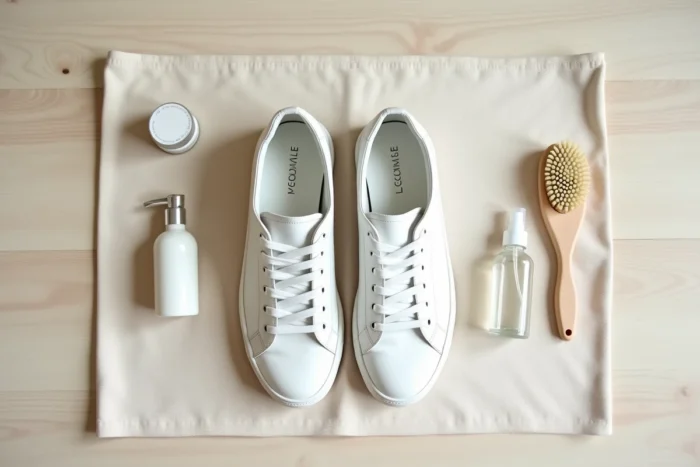
Drying and protection: often rushed steps
A perfect cleaning followed by poor drying deforms the shoe. Here are the points to respect:
- Remove the laces and insole to allow air to circulate throughout the shoe. Wash the laces separately in a bowl of soapy water.
- Stuff the inside with newspaper or unprinted absorbent paper. The paper absorbs residual moisture and maintains the shape of the upper during drying.
- Let dry at room temperature, away from any direct heat source. A radiator or hairdryer deforms thermoplastic adhesives and cracks the leather.
- Apply a protective spray suitable for the material once the shoe is completely dry. This waterproofing layer slows the embedding of future stains.
Protection is the most cost-effective step of the entire routine. A spray applied to a clean sneaker repels most everyday dirt and reduces the frequency of deep cleaning.
Maintenance frequency and economic impact on lifespan
Professionals in the field (cobblers, specialized cleaning services) increasingly emphasize one point: a regular light routine is much cheaper than heavy renovation or premature replacement. Waiting for the sneaker to be visibly dirty to act often means intervening too late on materials that do not forgive embedding.
A quick brushing after each outdoor outing and a wipe with a damp cloth once a week is enough to keep most pairs in good condition. Complete cleaning (sole, upper, laces, protection) can be limited to once or twice a month depending on usage.
The global shoe care market now exceeds five billion dollars according to Fortune Business Insights, driven by this growing awareness. The range of products suitable for sneakers has significantly expanded, with targeted formulas by material that did not exist a few years ago.
The most effective reflex remains the simplest: never store a dirty pair. Dirt that dries in the fibers overnight embeds itself permanently, while a quick dry brush taken within minutes of returning is enough to prevent it.