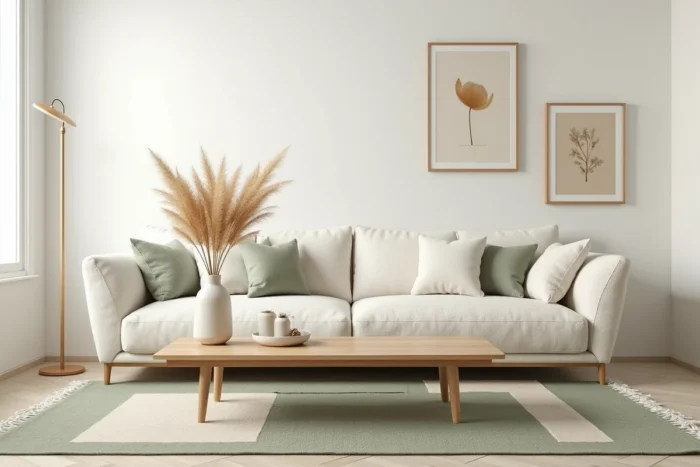
A sofa that also serves as an extra bed, a foldable desk in the living room, a rug placed to visually separate the dining area from the reading corner: interior decoration today is thought out from concrete constraints. Reduced spaces, remote work, the need for modularity, current decor trends primarily address usage problems before seeking visual impact.
Modular and multifunctional furniture: the answer to the lack of square meters
In a studio or a two-room apartment, one does not choose a piece of furniture solely for its style. It is chosen because it solves a problem. The current structuring trend is modular furniture designed for small spaces. Extendable tables, reconfigurable shelves, stackable seating: each piece of furniture must be able to change function depending on the time of day.
Remote work has accelerated this logic. When the living room becomes an office five days a week, one needs a workspace that disappears in the evening. Manufacturers now offer foldable wall consoles or compact desks integrated into bookshelves. The challenge is not to stack furniture, but to make it work double.
You can find decor news on D Kom Déco that illustrate this trend towards flexible arrangements, adapted to current lifestyles.
So-called “smart” interiors combine this modularity with light home automation: connected lighting, integrated outlets in furniture, automated blinds. The result is a living space that adapts without needing to be physically rearranged every morning.
Recycled and bio-sourced materials in interior decoration
The upcoming European regulation on eco-design imposes a “cradle-to-grave” approach for furniture. Concretely, this means that manufacturers must integrate sustainability, reparability, and recyclability from the design stage. This regulatory constraint drives the supply towards recycled polymer materials and bio-sourced composites.
We are seeing the emergence of chairs made from post-consumer recycled plastic, table tops made from plant fiber-based composites, and light fixtures molded from repurposed industrial waste. These are no longer niche products reserved for specialized shows.
For the renovation of an interior, this changes the game on two points:
- The choice of furniture is no longer based solely on price and aesthetics, but also on its ability to be repaired or recycled at the end of its life
- Bio-sourced finishes (low-VOC paints, plant-based varnishes, compressed fiber panels) are gradually replacing traditional petrochemical products
- Distributors are increasingly displaying the exact composition and origin of materials, which facilitates comparisons at the time of purchase
Feedback varies on the actual durability of certain bio-sourced composites compared to traditional materials, but the trend is clearly established.
Colors and ambiance: how to structure a room without partitioning
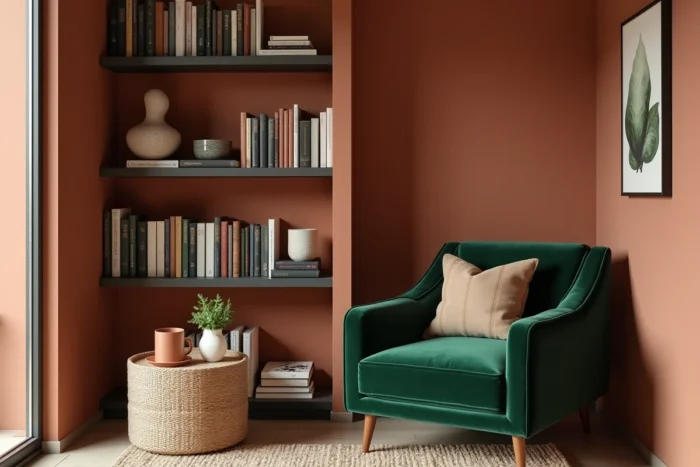
Rather than repainting an entire wall in a trendy shade, the most effective approach is to use color to delineate usage areas. A flat of terracotta paint behind a desk visually marks the workspace. A sage green wainscoting in the entrance creates a transition with the living room.
The colors returning this year in the collections of paint manufacturers revolve around warm and muted palettes. We are far from the uniform off-whites that dominated the previous decade. The return of color does not mean painting four walls electric blue.
The rug as a zoning tool in open spaces
Rugs and carpets are experiencing strong growth in interior decoration, driven by the need to visually delineate spaces in open living areas. A large rug under the coffee table isolates the living area. A runner in the hallway creates a circulation axis. A round rug under a reading chair creates a micro-space without putting up a partition.
The advantage compared to a separating piece of furniture is cost and reversibility. You can move a rug in thirty seconds. You cannot move a glass partition.
Wall art and decorative objects: placing accents without overloading
The classic temptation is to accumulate. Frames, mirrors, decorative shelves, hanging plants: we fill the walls to saturation. The current trend goes in the opposite direction. We place one or two strong elements per wall, and let the rest breathe.
A large abstract painting above a sofa structures the entire room. A natural material pendant (rattan, woven linen) in the center of a dining room is enough to set the tone. Accumulation works in certain styles (curiosity cabinet, bohemian vibe), but it requires a mastery of mixing that most interiors cannot support.
Natural fibers and mixed textures
Wood, linen, rattan, and hemp remain safe bets. Their strength lies in bringing warmth without imposing a specific style. A rattan basket works equally well in a Scandinavian living room as in a contemporary interior.
The key is to layer textures rather than colors. A raw linen cushion on a corduroy sofa, a boucle wool throw on a smooth leather seat: these tactile contrasts create depth without adding visual complexity.
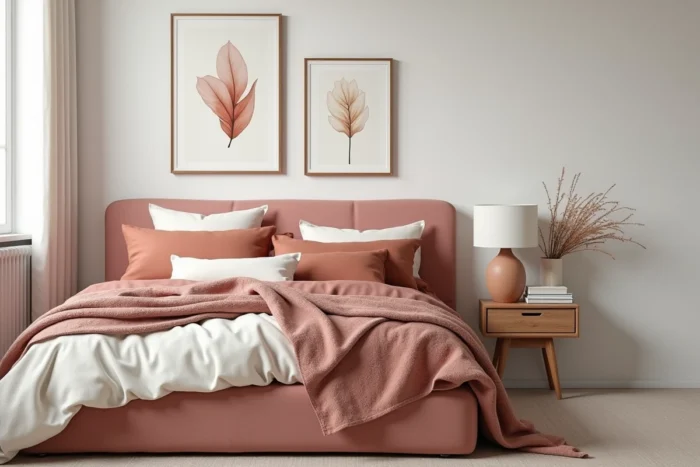
Decorating an interior by following current trends does not mean changing everything. A well-placed rug, a modular piece of furniture that frees up space, a shade applied in the right place is enough to transform the ambiance of a room. The most effective approach remains to start from the real constraints of each room, surface, light, usage, and to choose each decorative element as a concrete response to that problem.