Successfully maintaining a natural garden all year round requires understanding what happens beneath the surface before planting anything. Most guides offer a seasonal calendar with standardized actions. The problem is that two gardens located just a few kilometers apart can react very differently depending on their soil, exposure, and drainage areas. What parameters should be observed, and how can one adapt ecological gardening practices to each specific context?
Soil and Exposure Diagnosis: The Prerequisite Ignored by Calendars
Before any planting, a diagnosis of the land structures all future decisions. Three elements deserve precise attention: soil texture, actual exposure to prevailing winds, and water stagnation points after rain.
Soil texture can be easily tested by moistening a handful of earth. Clay soil forms a compact ball, sandy soil crumbles. In between, loamy soil remains pliable without disintegrating. Each texture requires different mulching and watering techniques. Clay soil retains water but compacts in summer, while sandy soil drains quickly and requires frequent organic inputs.
Exposure is not just about north-south orientation. Windy areas accelerate evaporation and weaken young plants. Low points in the garden, where water stagnates, promote fungal diseases. By identifying these micro-zones from the start, you choose plants suited to each location rather than correcting mistakes mid-season. Finding information on Jardiner Naturellement allows for a deeper exploration of this observation-before-action approach.
Permanent Mulching and Water Retention: An Annual Strategy Against Drought
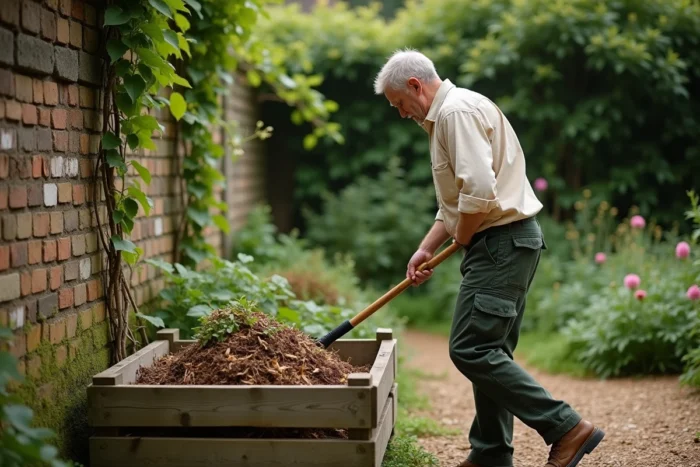
Mulching is no longer just a summer trick. With the increasing frequency of heat and drought episodes across the territory, ADEME now positions permanent mulching as a climate adaptation strategy throughout the year. The principle: maintain soil coverage in all seasons to limit evaporation, protect microbial life, and slow down runoff.
| Type of Mulch | Estimated Lifespan | Effect on Soil | Application Season |
|---|---|---|---|
| Wood Chips (BRF) | More than a year | Feeds soil fungi, improves structure | Autumn, Spring |
| Straw or Hay | Several months | Decomposes quickly, adds nitrogen | Spring, Summer |
| Dead Leaves | Several months | Provides shelter for wildlife, light organic input | Autumn, Winter |
| Dry Grass Clippings | Several weeks | Quick nitrogen input, risk of compaction if too thick | Spring, Summer |
BRF stands out for its ability to structure the soil over the long term. In contrast, fresh grass clippings applied in thick layers ferment and can burn roots. Alternating mulching materials according to the season remains the most effective method for a vegetable garden or ornamental garden.
Localized watering (drip irrigation, buried oyas) complements this approach. Water reaches the root zone directly without wetting the foliage, reducing fungal pressure and waste.
Biocontrol Products in the Garden: What ANSES Reminds Us About Risks
Plant extracts, black soap, sulfur, copper: these products are presented as safe alternatives to synthetic pesticides. However, ANSES reminded us in 2025 that some natural substances are not without risk to pollinators and beneficial insects.
Copper, for example, accumulates in the soil. Used every year in a vegetable garden, it eventually degrades the microbial life it is supposed to protect. Plant extracts like nettle or rhubarb, effective against aphids or slugs, can also affect non-target insects if the spraying is too broad.
- Limit treatments, even natural ones, to areas that are actually affected rather than spraying the entire garden
- Favor beneficial insects (ladybugs, lacewings, hedgehogs) by providing them with shelters: wood piles, dense hedges, nesting boxes
- Systematically check that the product used has market authorization, even for amateur use
- Space out copper applications to avoid accumulation in the soil over multiple seasons
This vigilance transforms the approach: a natural garden does not replace a chemical product with a plant-based product applied in the same way. It relies on an ecosystem where pests are regulated by the biological diversity of the area.
Welcoming Birds and Beneficial Wildlife All Year Round
An ecological garden works better when its wildlife is diverse. Birds consume significant amounts of caterpillars, aphids, and slugs. Their presence depends on three factors: accessible water points, areas of dense plant cover, and an absence of systematic foliar treatments.
In winter, occasional feeding with unsalted sunflower seeds supports resident populations. In spring, nesting boxes installed before March allow tits to settle. In summer and autumn, berry-bearing hedges (elderberry, hawthorn, blackthorn) provide a continuous food resource.
The hedgehog, often overlooked, is a formidable ally against slugs. A simple passage under a fence (an opening of about fifteen centimeters is sufficient) and a pile of dead leaves in a quiet corner allow it to settle in. Beneficial wildlife sustainably replaces repeated treatments, provided the garden offers shelter and food year-round.
A natural garden is not managed with a fixed calendar. The soil, available water, present beneficials, and the micro-conditions of the land dictate the useful actions for each period. Observe before acting, mulch before watering, welcome before treating: these three priorities structure a resilient outdoor space, season after season.