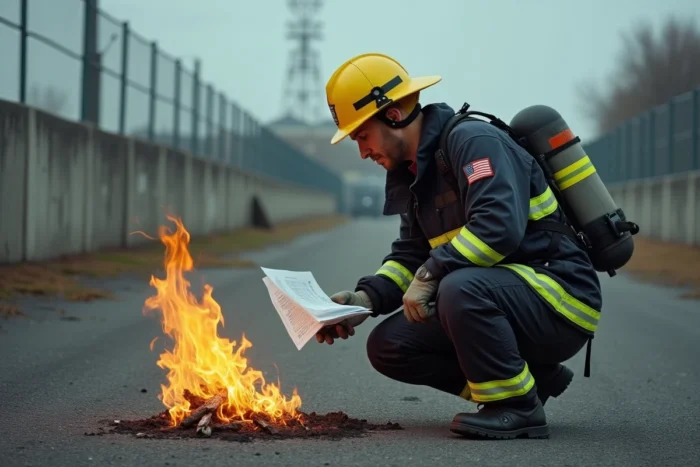
A fryer fire in a professional kitchen is not fought like a fire starting on an electrical cabinet. Using the wrong extinguisher can worsen the situation or even cause an explosion. Fire classes exist precisely to avoid this mistake: they categorize fires according to the fuel involved and guide the choice of the appropriate extinguishing method.
When multiple risks coexist: think by area, not by pictogram
Have you ever closely observed a workshop or a technical room? You often find wood stored against a wall, an electrical panel two meters away, solvent containers on a shelf, and sometimes lithium batteries charging. Each element falls under a different fire class.
The classic reflex is to read the pictogram affixed to the nearest extinguisher. In a simple environment (an office with paper and furniture), this is sufficient. But in a room where multiple fuels coexist in just a few square meters, a single pictogram does not cover all scenarios.
The right approach is to map the concrete risks of the area before choosing the equipment. Understanding the different fire classes allows for reasoning by risk zone rather than by a single device. A multi-purpose ABC powder extinguisher covers three classes, but it does not address metals or cooking fats. A CO2 extinguisher protects against electrical fires and certain liquids, but remains ineffective on deeply burning wood.
The current logic in fire safety is shifting towards a risk analysis based on concrete hazards rather than just class letters. This is a methodological change that public content rarely addresses.
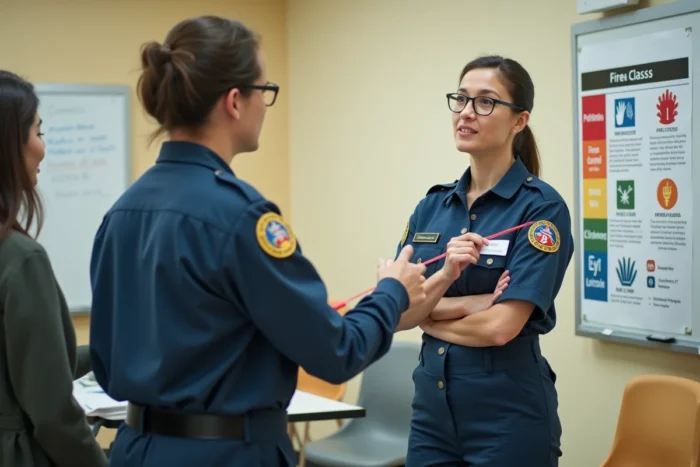
Fire classes A, B, C: the three most common situations
Class A includes fires involving solid materials that form embers: wood, paper, cardboard, fabric, certain plastics. These are the most common fires in homes and offices. Extinguishing relies on cooling the material. A water spray extinguisher is well-suited for this type of fire.
Class B concerns flammable liquids and solids that melt under heat: gasoline, solvents, paints, motor oils, certain liquefiable plastics. Water sprayed in a jet can disperse the burning liquid and spread the fire. Foam or powder is preferred, as they isolate the fuel from oxygen.
Class C targets gas fires: propane, butane, natural gas, acetylene. The priority before any extinguishing is to cut off the gas supply. Extinguishing the flame without stopping the leak creates an explosion risk, as the gas continues to accumulate in the space without visible signs.
Choosing an extinguisher when A, B, and C coexist
In a garage or workshop, these three classes often overlap. The ABC powder extinguisher remains the most versatile for this type of environment. The powder acts by chemically inhibiting combustion and covers the first three classes.
Its drawback: the powder spreads everywhere, damages electronic equipment, and significantly reduces visibility. In a computer room, a CO2 extinguisher better protects the equipment while addressing class B fires.
Metal fires and grease fires: classes D and F, the unknown traps
Class D concerns fires involving combustible metals: magnesium, sodium, aluminum powder, titanium. These fires are rare in domestic settings but common in industry. Water and foam are strictly prohibited on a class D fire: contact between water and certain molten metals causes violent, sometimes explosive reactions. Only specific extinguishing agents (special powders based on sodium chloride, for example) are suitable.
Class F pertains to cooking oils and fats, a daily risk in professional and domestic kitchens. A fryer fire reaches very high temperatures. Spraying water on burning oil causes an instant vaporization effect that projects flaming droplets.
Extinguishers dedicated to class F use chemical agents that form a saponification layer on the surface of the oil. This film cuts off the oxygen supply and lowers the temperature.
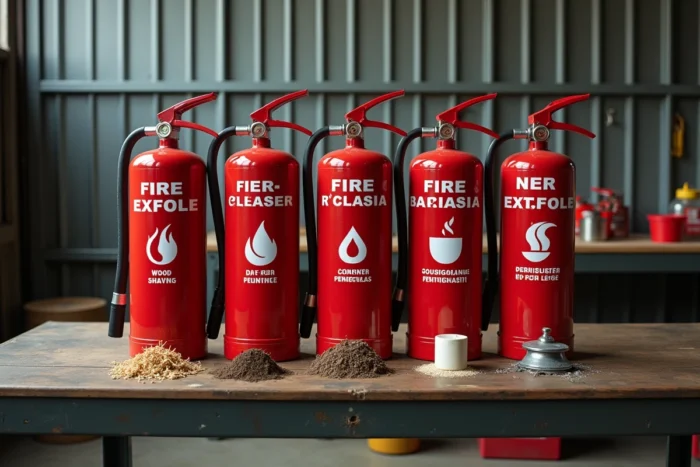
Lithium batteries and electrical fires: rising risks
Electrical fires do not form a standardized class in the strict European sense, but they represent an operational category that every occupant should know. The first action is to cut the power. Once the supply is cut, the fire is handled according to the nature of the burning material (plastic from a cable = class A, oil from a transformer = class B).
On live equipment that cannot be isolated, CO2 remains the safest extinguishing agent as it is non-conductive. Powder also works, but its corrosive residues can damage circuits.
The specific case of lithium batteries
Lithium-ion batteries pose a distinct problem. Their thermal runaway can cause fire reignitions several hours after initial extinguishment. Recent regulations impose specific measures for storage and sorting sites containing lithium batteries.
In practice, these fires combine a chemical risk (release of toxic gases), an electrical risk (residual voltage), and a risk of reignition. Classic extinguishers are not always sufficient. Some manufacturers are developing water-based agents specifically formulated for lithium.
Identifying the fire class in a real situation: a simple method
When faced with a fire outbreak, the question to ask is not “which letter?” but “what is burning?”. Here is a quick reference guide:
- Embers are forming and the material remains solid (wood, paper, fabric): class A, extinguishing by cooling with water
- A liquid ignites or a solid melts while burning (gasoline, solvent, industrial grease): class B, smothering with foam or powder
- A blue flame emerges from a gas pipe or appliance: class C, cut the supply before any intervention
- A metal emits intense white light and projections: class D, do not use water, alert the emergency services
- Cooking oil catches fire in a container: class F, cover or use a dedicated extinguisher, never water
In a mixed area, analyzing the dominant risk guides the choice. A restoration workshop with fryers and cardboard storage requires at least a class F extinguisher near the cooking stations and an ABC extinguisher for the rest of the area.
The regulatory trend pushes towards engineering studies that assess fire risk site by site, with justifications to be kept in the safety register. Correctly identifying what is burning remains the action that conditions everything else: the right extinguisher, the right distance, the right technique.